

“Lima York” : Is Latin America the Next Frontier for Autonomous Driving?
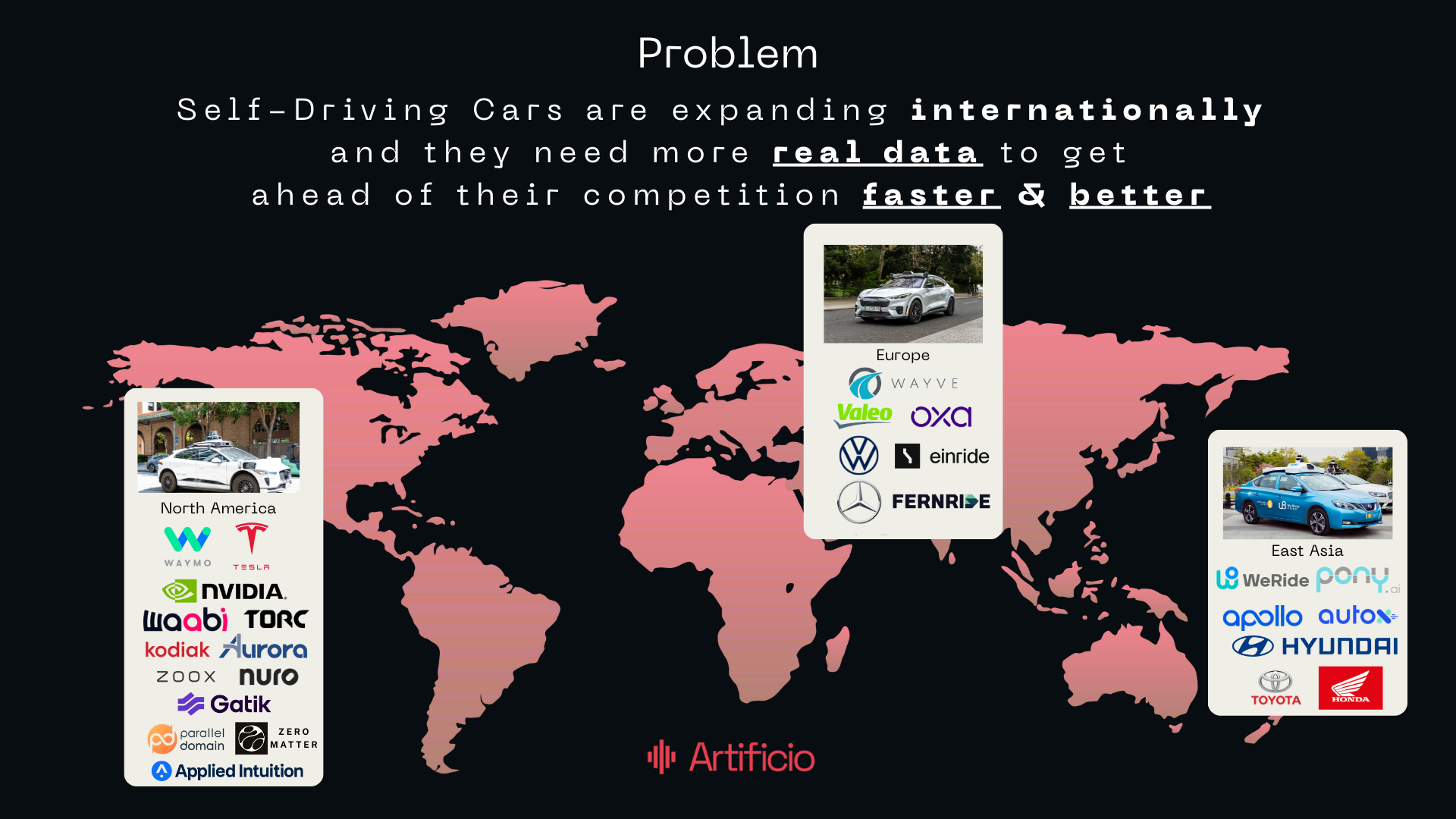
The past two years have brought sweeping changes across the autonomous driving landscape. Cruise ceased operations, Nuro pivoted its strategy, Wayve pursued international expansion, WeRide listed on NASDAQ, and Waymo became a landmark experience for visitors to San Francisco. At the same time, NVIDIA unveiled its push into autonomous driving at GTC 2025, and Tesla made clear its intentions in the robotaxi space. Taken together, these shifts point to an accelerating worldwide competition, prompting a pivotal question: which markets will autonomous vehicles enter next, and what forces will determine that trajectory?
Latin America: An Untapped Strategic Market
Latin America makes a strong case for being the next major frontier in autonomous driving. The region has historically been a battleground for geopolitical rivalry, and that dynamic remains very much alive today. Throughout the Cold War, the US and Soviet Union competed for technological and political sway in countries such as Cuba, Chile, Argentina, and Peru. That contest has now shifted: the US and China are both jockeying for regional influence. Peru, for example, recently attracted a $3.4 billion Chinese investment to build South America’s largest seaport, while the US countered with a reported $300 million spaceport initiative near the equator, rekindling a 1970s NASA collaboration. Both moves reflect a deepening contest for technological and ideological foothold across the continent.
Autonomous driving may well become the next battleground in this rivalry. To reach profitability, companies like Waymo, WeRide, and Wayve need to scale quickly by breaking into new geographies. Each of these players holds a commanding position on home soil — Waymo in the US, Wayve in the UK, WeRide in China — which makes it difficult for outsiders to compete directly. WeRide, for instance, could encounter cultural and political resistance in the US market despite its NASDAQ listing, given its Chinese roots. Europe, while boasting a GDP roughly 3 times that of Latin America, presents its own obstacles: intricate regulatory frameworks and a cultural inclination toward caution have already slowed progress there; cross-company expansion battles of this kind have even extended to Japan.
Latin America, by contrast, stands out as a strategically attractive alternative. Cities such as Lima, Barranquilla, Mexico City, and São Paulo share road infrastructure and traffic signage conventions with the US, lowering the barrier for adapting existing autonomous systems. The region also benefits from comparatively flexible AI regulations relative to Europe, making it a more welcoming environment for testing and commercial rollout. The key hurdle is Latin America’s unpredictable driving culture — marked by assertive lane changes and densely packed urban traffic in places like Peru and Mexico. Yet most of the region also lacks the extreme weather that complicates sensor performance, making it ideal for companies seeking environmental stability for their camera and LiDAR suites. An autonomous system that can be trained and validated in these demanding conditions would emerge as a highly capable platform for deployment virtually anywhere in the world.
Data as the New Raw Material: Latin America’s Untapped Wealth
Latin America’s appeal goes well beyond its infrastructure and regulatory environment. The region holds an abundance of something even more valuable to autonomous driving: data. Just as Mexico’s Germán Larrea Mota-Velasco (Grupo Mexico), Peru’s Eduardo Hochschild (Hochschild Mining), and Chile’s Antofagasta PLC have amassed wealth by exporting copper, silver, and gold for use in power grids, semiconductors, and solar panels, a direct parallel can be drawn to the “data mining” industry powering the artificial intelligence that will drive autonomous vehicles. Across Latin America, distinctive traffic behaviors and edge-case situations — from Lima’s chaotic intersections to Mexico City’s congested, fast-moving streets — produce what amount to “rare minerals” in data form: diverse, high-value data points for training, testing, and 3D simulation. As explored in our earlier Blog Post, these datasets are indispensable for building AI systems resilient enough to handle the long tail of real-world driving scenarios.
The defining question becomes: who will dominate the data-mining industry that powers autonomous mobility? Companies that move early to harvest Latin America’s vast, underdeveloped data reserves could unlock billions of dollars in value — mirroring the trajectories of traditional mining dynasties. Whether it is local startups or global players staking out territory first, whoever builds this data foundation early could fundamentally reshape the AI landscape with datasets that no other region on Earth can replicate.
Copilotless’s Mission: Laying the Data Foundation for the Future
At Copilotless, we are building the data infrastructure that autonomous systems will depend on to navigate the world safely and reliably. Our pilot operations in Lima, Peru — one of the planet’s most demanding urban environments, defined by aggressive driving styles, unpredictable pedestrian movement, and inconsistent road conditions — are establishing a critical foundation. In Lima, we gather video, GPS, and IMU data and are moving toward integrating LiDAR, recording intricate traffic interactions and edge cases that rarely appear in existing global datasets. This work builds directly on the principles developed through our earlier research on rigorous data collection: Robusto-1.
Why Lima? Because it embodies the “long tail” of driving scenarios — extreme, high-stakes conditions that push autonomous systems to their boundaries. If an autonomous vehicle can navigate Lima safely, it is prepared for virtually any city on Earth. With this foundation established, Copilotless is now broadening its reach to gather training, testing, and 3D simulation datasets from New York City, Miami, and Boston, where high-density, well-regulated, and varied urban environments complement Lima’s complexity and enable meaningful cross-regional analysis. By integrating these geographies into a unified collection program, we are assembling a distinctive, multimodal dataset that spans the full range of global traffic conditions, placing Copilotless at the leading edge of the data-driven autonomous driving transformation.
The autonomous driving industry stands at a defining crossroads. Progress will hinge not just on breakthroughs in technology, but equally on shrewd market entry decisions, cultural fluency, and an ability to navigate geopolitical realities. Latin America — with its infrastructure familiarity to North America, relatively open regulatory climate, and uniquely demanding urban conditions — could become the proving ground for the next generation of autonomous vehicles. Will established global players like Waymo or WeRide be the ones to capitalize on this moment, or will local innovators step up to claim it?